

Introduction
Folk songs are the heartbeat of a community — simple, honest, and passed down through generations. In Assam, assamese folk song lyrics capture the rhythms of daily life, the seasons, and the deep-rooted beliefs of its people. These songs live in fields, kitchens, riverbanks, and festivals, carrying stories of love, labour, prayers, and laughter. In this guide you will find an introduction to Assamese folk song lyrics, learn what different types mean, discover popular traditional songs (with meanings and context, not full lyrics), and understand why these songs matter to culture and identity.
These Assamese folk song lyrics reflect the traditions, stories, and cultural life of Assam.
Explore our Assamese song lyrics collection to discover songs across genres, artists, and traditions.
What are Assamese folk songs?
Assamese folk songs are traditional melodies and verses created and kept alive by ordinary people rather than formal composers. They belong to an oral tradition — taught by listening, repeating, and performing. Folk songs often serve practical roles: they accompany work (sowing, harvesting), mark life events (birth, marriage), and bind communities during festivals. Their language is everyday Assamese, and their strength lies in storytelling and shared memory.
Types of Assamese folk songs
Assamese folk music is rich and varied. Some well-known types include:
- Borgeet:“ৰাম নাম…” (Ram naam…) Devotional songs composed in the Vaishnavite tradition by saints like Sankardev and Madhavdev. These are devotional yet poetic and often performed in namghars (prayer halls).

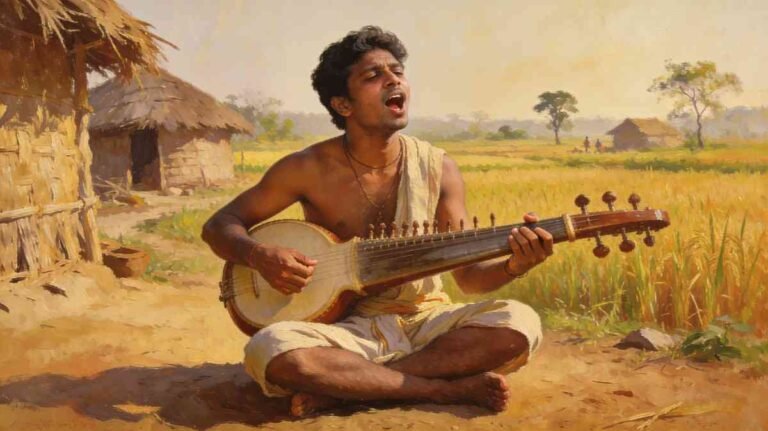
- Tokari Geet: Songs accompanied by the tokari (small stringed instrument). These often tell stories or moral lessons and are lyrical and contemplative.
- Kamrupi Lokgeet: Folk songs from the western Kamrup region with distinct dialect, rhythm, and local imagery.
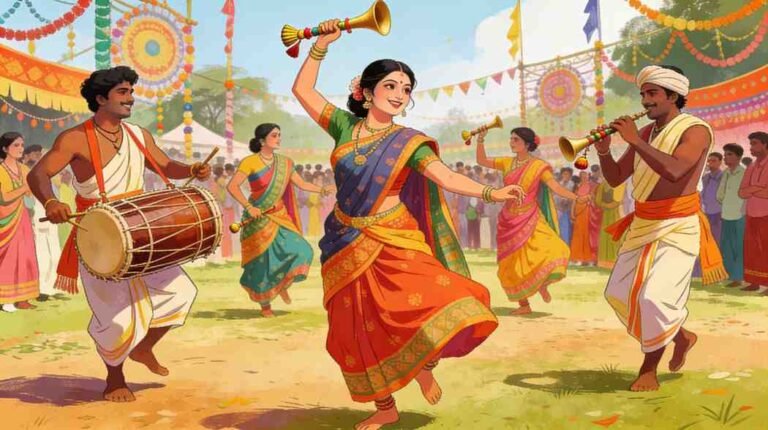
- Bihu-related folk: Energetic songs and dances tied to the Bihu festival; they celebrate fertility, farming cycles, courtship, and seasonal joy.
Each type carries its own musical style, instruments, and regional color.
Popular Assamese Folk Songs
Below are well-loved folk songs and forms. For each I give a brief description, the core meaning or theme, and why people still sing them.
- Borgeet (collection)
- Short description: Devotional lyrical songs written in classical ragas.
- Meaning / theme: Deep devotion, bhakti, and spiritual longing.
- Why popular: Revered for spiritual depth and historical importance in Assam’s Vaishnavite culture.
- Tokari Geet — classical examples
- Short description: Storytelling songs with tokari accompaniment.
- Meaning / theme: Moral tales, reflections on life, and everyday wisdom.
- Why popular: Intimate performance style and clear storytelling make them memorable.
- Kamrupi Lokgeet — regional gems
- Short description: Folk songs from Kamrup, often rustic and earthy.
- Meaning / theme: Local stories, humour, love, and farm life.
- Why popular: Strong regional identity and distinctive melodies that feel immediate and real.
- Bihu Geet — love and celebration
- Short description: Energetic songs sung during Rongali Bihu with dhol and pepa.
- Meaning / theme: Courtship, seasonal renewal, joy, and community celebration.
- Why popular: Lively rhythms that invite dancing and group participation.
You can also explore Assamese Bihu song lyrics to understand how folk traditions influence festive music.
- Ojapali-influenced songs
- Short description: Narrative performance with chant-like singing and dramatic storytelling.
- Meaning / theme: Mythological tales, heroic deeds, and ancient stories retold.
- Why popular: Unique theatrical delivery and strong cultural roots make it compelling.
- Goalparia Lokgeet
- Short description: Folk tunes from Goalpara with simple, flowing melodies.
- Meaning / theme: River life, cattle, and close-knit village stories.
- Why popular: Melodic simplicity that stays with listeners and reflects local life.
- Dihanaam and Naam Ghoxa songs
- Short description: Devotional congregational singing with call-and-response patterns.
- Meaning / theme: Collective devotion, praise, and religious storytelling.
- Why popular: Community participation and spiritual comfort keep these songs alive.
- Work songs (e.g., harvesting tunes)
- Short description: Rhythmic songs that coordinate and lighten agricultural labour.
- Meaning / theme: Cooperation, encouragement, and the rhythms of rural life.
- Why popular: Functional value and catchiness make them part of daily routine.
- Marriage and lullaby folk songs
- Short description: Melodies sung during weddings and to soothe children.
- Meaning / theme: Blessings, hopes for the future, and tender care.
- Why popular: Passed through families; they carry memory and emotional continuity.
- Seasonal and ritual songs
- Short description: Songs tied to planting, harvest, monsoon, and rituals.
- Meaning / theme: Respect for nature’s cycles and ritual meanings.
- Why popular: They mark time and connect people to land and tradition.
Themes in folk songs
Folk songs of Assam often touch on a few recurring themes:
- Nature — rivers, paddy, monsoon, birds, and flowers shape imagery.
- Daily life — farming tasks, market scenes, and household moments find voice in song.
- Spirituality — devotion, myths, and saintly teachings are woven into many forms.
- Community — festivals, work, marriages, and communal memory hold songs together.
These themes make the songs easily understood and widely shared across generations.
Many Assamese folk song lyrics use simple language to express deep cultural meanings.
Folk song lyrics meaning (English)
Explaining meanings in English opens Assamese folk songs to new listeners. Translating or paraphrasing helps preserve the emotion, cultural references, and storytelling. Important considerations when rendering assamese folk song lyrics in english:
- Preserve tone over literal words — a phrase about a “river” might mean longing or steady life, not just geography.
- Keep cultural references clear — instead of a direct translation, add a short note about a local custom or symbol.
- Avoid full literal translations that strip away rhythm and feeling; aim to convey mood and story.
Understanding meaning also helps learners, musicians, and casual listeners appreciate the depth behind simple lines.
For better understanding, browse Assamese song lyrics in English to explore meanings and translations.
Cultural importance of folk songs
Assamese traditional songs are more than music — they are living records of people’s lives.
- Preservation of culture: Folk songs carry language, customs, and history in a form that can be taught and enjoyed without formal institutions.
- Oral history: Stories of local heroes, migration, and daily hardship often survive only in songs.
- Identity: Regional styles like Kamrupi or Goalparia define local identity and pride.
- Social cohesion: Singing together during festivals or work binds communities and passes values to younger generations.
These functions make folk songs essential to Assam’s cultural fabric.
Explore more Assamese songs
If you enjoyed this guide, you may also like:
- Assamese song lyrics
- Assamese romantic song lyrics
- Assamese Bihu song lyrics
- Assamese song lyrics in English
Each category connects to folk traditions in its own way — from devotional Borgeet to lively Bihu tunes.
FAQ :assamese folk song lyrics
A: This guide focuses on meanings, history, and cultural context rather than reproducing full lyrics, to respect copyright and highlight interpretation.
A: Yes — look for translated collections, academic notes, or community resources that provide meanings and contextual notes rather than literal full lyrics.
A: Tokari, dhol, pepa, taal, flute, and sometimes harmonium or traditional string instruments are common, depending on genre and region.
A: Learn from elders, local performances, community groups, or music workshops. Listening and repeating is the traditional method.
A: Yes — folk songs adapt with shifting lifestyles, instruments, and social needs, but core stories and themes often remain constant.
Conclusion
Assamese folk song lyrics are a living treasure — simple words that hold deep stories of land, people, and belief. They teach history, celebrate seasons, and hold communities together through shared memory. By exploring meanings, types, and cultural context, you can appreciate how these traditional songs reflect Assam’s warmth and wisdom. Dive into the songs listed here, listen with attention, and you’ll find each melody carries a small, bright piece of Assam’s heart.
These Assamese folk song lyrics continue to preserve the traditions, stories, and identity of Assam across generations.