

Introduction
Assamese song lyrics in English opens a door to the soul of Assam for listeners who don’t speak the language. Translations and explanations help people feel the emotions, understand local images, and connect with stories behind the music. Many search for assamese song lyrics meaning because songs are used at weddings, gatherings, study, or simply late-night listening. This post gives clear, simple translations and meanings for a selection of Assamese songs across love, old classics, Bihu, and folk forms. You’ll also find short Hindi explanations for support, guidance on how to interpret lyrics, and links to related clusters so you can dive deeper into any genre.
To explore more collections, visit our Assamese song lyrics hub.
You can also read Assamese love song lyrics for emotional tracks, or explore Assamese old song lyrics for golden-era classics.
For festive music, check Assamese Bihu song lyrics, and for more romantic vibes, browse Assamese romantic song lyrics.
Many users search for assamese song lyrics in English to understand emotions beyond language barriers. For example, a simple line like “মোৰ হৃদয়ত তুমি” — You live in my heart — shows how deeply emotions are expressed in Assamese songs.
Why translation of Assamese song lyrics matters
- Language barrier: Not everyone understands Assamese, yet songs often contain universal feelings. Translations bridge that gap.
- Emotional understanding: A good translation preserves mood—longing, joy, comfort—so the listener experiences the song, not just the words.
- Cultural connection: Many lines reference local customs, nature, or festivals. Explaining these helps non-local listeners appreciate subtler meanings.
Translations should prioritize feeling and context over literal word-for-word accuracy. Below you’ll find examples that aim to keep both meaning and mood intact.

Assamese Song Lyrics in English with Meanings
Here are 8 songs from different categories. Each entry includes a short description and a clear English meaning. Where helpful, one short Assamese line and its meaning are provided.
- Love song — “Moi Tomake Bhal Pau”
- Short description: A simple, heartfelt declaration of love.
- Meaning in English: The singer expresses steady devotion—promising presence, small joys, and everyday care. It’s less about grand gestures and more about belonging.
- Optional Assamese line: “মোৰ হৃদয়ত তুমি” — You live in my heart.
Why it matters: This type of line works well in confessions and intimate moments because it feels direct and sincere.
- Old classic — “Dihingor Par” (riverbank memories)
- Short description: A nostalgic song anchored in riverside imagery.
- Meaning in English: The river becomes a mirror of memory—childhood games, first meetings, and the slow flow of time. The mood is gentle wistfulness rather than bitter regret.
- Optional Assamese line: “Dihingor parote” — Meaning: “By the banks of the Dihing (river).”
Why it matters: Place names evoke strong cultural memories for listeners from those regions.
- Bihu song — “Rongali Bihu Geet” (festival courtship)
- Short description: An upbeat Bihu song celebrating spring, dance, and flirtation.
- Meaning in English: Bihu songs often celebrate renewal and playful courtship—inviting dance, offering praise, and rejoicing in abundance. The lyrics usually include references to fields, young lovers, and festive sounds.
- Hindi support: “यह गीत बसंत के उत्सव और प्रेम-लटकेपन का जश्न मनाता है।”
Why it matters: Understanding festival terms (pepa, dhol) helps listeners picture the scene and feel the energy.
- Folk song — “Tokari Geet” (storytelling melody)
- Short description: A narrative folk song accompanied by the tokari instrument.
- Meaning in English: Tokari Geet often tell local tales—lessons, humour, or moral points—woven with images of village life, animals, and elders’ wisdom.
- Optional Assamese line: “Tokari bajae, katha koi” — Meaning: “The tokari plays while the story is sung.”
Why it matters: These songs function as oral history and social commentary; translations should clarify cultural references.
- Romantic ballad — “Rati’r Alo” (light of the night)
- Short description: A tender nocturne promising protection and closeness.
- Meaning in English: The singer promises to be the beloved’s light in dark nights—comforting, watchful, and peaceful. The tone is soothing, like a lullaby for adults.
- Hindi support: “यह गीत रात की चुप्पी में साथ देने का आश्वासन देता है।”
Why it matters: Night imagery often stands for safety and intimacy across Assamese songs.
- Sad love song — “Biphartita Prem” (broken love)
- Short description: A song about loss, separation, and healing.
- Meaning in English: The lyrics walk through stages: shock, memory, quiet acceptance. The singer remembers small details that make the loss real but ends with a hint of resilience.
- Optional Assamese line: “Xopun bhanga mon” — Meaning: “A heart with broken dreams.”
Why it matters: Sad songs heal by naming pain; translations should respect that honesty.
- Devotional classic — “Borgeet” (devotional melody)
- Short description: A devotional song from Assam’s Vaishnavite tradition.
- Meaning in English: Borgeet communicate devotion and surrender. Their poetic lines often describe longing for the divine, using metaphors of separation and union similar to love songs—but directed at God.
- Hindi support: “ये भक्ति गीत भक्ति और आत्मीयता की भावना जगाते हैं।”
Why it matters: Knowing the devotional context prevents misreading metaphors as romantic when they are spiritual.
- Work / harvest song — “Harvest Tune”
- Short description: Rhythmic songs sung while planting or harvesting.
- Meaning in English: These tunes coordinate labour, lift spirits, and embed agricultural cycles into social life. Lyrics celebrate community effort and gratitude to nature.
- Optional Assamese line: “Hate hate kaam kori” — Meaning: “Working hand in hand.”
Why it matters: Work songs show how music is woven into everyday survival and celebration.
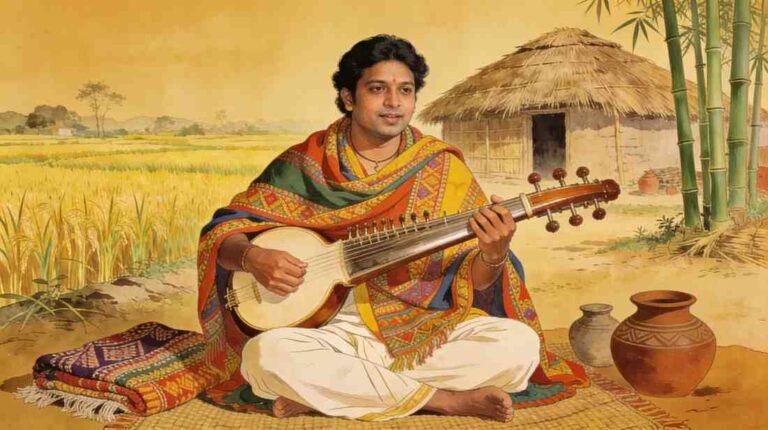
Assamese song lyrics in Hindi
(basic understanding)
Hindi translations can help many readers who speak Hindi but not Assamese. Short Hindi notes can explain cultural words and emotions quickly.
- Example: Assam’s word “bihu” — Hindi: “बिहू (बसंत का त्योहार)” — explains it’s a spring festival.
- Example: “pepa” (Assamese wind instrument) — Hindi: “पेपा, एक पारंपरिक वाद्य” — clarifies the musical context.
Keep Hindi explanations short and supportive; primary focus should remain on English meanings and fuller context.
How to understand assamese song lyrics in English
- Focus on emotion, not literal words: Ask what the song feels like—longing, celebration, comfort—then let translations follow that mood.
- Look for cultural symbols: Rivers, paddy, bamboo, and festival names often carry symbolic weight (home, livelihood, resilience, renewal).
- Consider context: Is the song devotional (Borgeet), folk (Tokari), festival (Bihu), or cinematic? Context changes meaning.
- Read paraphrase + note: Prefer a brief paraphrase and a small note explaining local reference rather than word-for-word translation.
- Listen to performance: Vocal tone, pauses, and music all shape meaning—translations without listening can miss nuance.
Common themes in Assamese songs
Assamese songs meaning in english often revolve around recurring themes:
- Love: romantic, familial, or spiritual devotion.
- Nature: monsoon, rivers, fields as emotional mirrors.
- Culture: festivals, local instruments, and community customs.
- Philosophy: reflections on life, change, and time.
Understanding these themes makes it easier to translate lines in ways that feel authentic.

Explore more Assamese songs
FAQ :Assamese Song Lyrics in English
No—this guide provides meanings, translations, and short explanatory phrases rather than full lyrics, to respect copyright and focus on interpretation.
A: Translations here prioritize emotional accuracy and cultural context over literal, word-for-word rendering. Literal translations can miss poetic nuance.
A: Yes—one or two short lines can be included with translation and context, but full lyrics should be avoided without permission.
A: Start with simple love songs or Bihu tunes—their repetitive structure and clear imagery make them easier to follow and translate.
A: Read short notes on instruments (pepa, tokari), festivals (Bihu), and places (Dihing, Brahmaputra) to build cultural understanding.
Conclusion
Assamese song lyrics in English bring Assam’s music to the wider world by translating feeling, not just words. Clear translations and short cultural notes help listeners from different backgrounds understand romance, nostalgia, devotion, and the simple joys that songs describe. Use this guide as a hub—follow the clusters for love, old classics, Bihu, and folk songs—and let translations guide you into Assam’s musical heart.
Thus this guide to assamese song lyrics in English helps you connect with Assamese music on a deeper level.