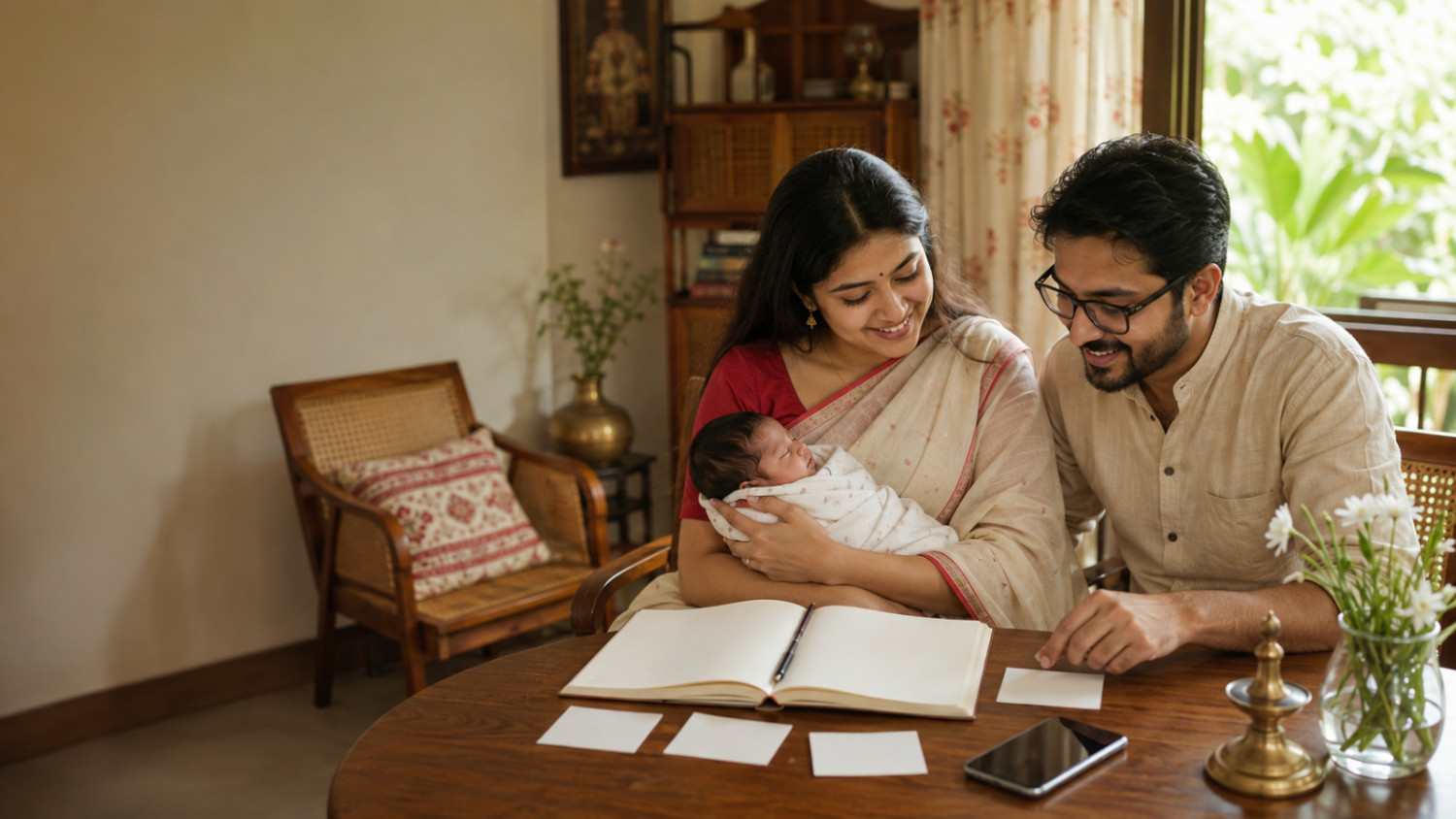

This curated guide to top 100 muslim girls names brings together 100 established choices with carefully checked meanings, origins, source forms, and useful spelling variants. The collection includes long-established Arabic names alongside selected Persian, Turkish, and cross-cultural names used in Muslim naming traditions. Linguistic origin and Muslim usage are treated as separate facts: a name used by Muslim families is not automatically Arabic, Quranic, or religious in etymology. Part 1A presents the first 50 names, while uncertain meanings, cross-gender usage, and source-form distinctions are kept visible instead of being simplified into attractive but unsupported claims.
For a broader collection beyond this exact-100 shortlist, explore the HuntBliss Muslim Girl Names resource.
📖 Quick Summary
- The complete article contains exactly 100 distinct underlying names, with Part 1A covering #1–#50 and Part 1B covering #51–#100.
- The top 100 muslim girls names are presented as an editorially curated collection rather than a claim of worldwide statistical popularity or an official global ranking.
- Meanings, linguistic origins, and source forms are fact-checked cautiously, with genuine uncertainty or regional variation preserved where necessary.
- Spelling, transliteration, and regional variants are consolidated where they represent the same underlying name instead of being counted as separate entries.
- Arabic, Persian, Turkish, and other cross-cultural naming histories are distinguished carefully rather than being treated as a single linguistic origin.
- Cross-gender usage is qualified where relevant, while Quranic vocabulary, historical or religious associations, and actual Quranic proper-name status are distinguished to avoid misleading claims.
📚 Table of Contents
How Meanings, Origins & Spellings Were Checked

For this top 100 muslim girls names collection, HuntBliss checks the underlying name rather than treating every Roman spelling as a separate entry. Source-script forms help distinguish genuinely different names from transliteration variants, while linguistic origin is kept separate from later Muslim, regional, or cross-cultural usage.
Meanings are kept concise and are qualified when the etymology is uncertain. Common internet glosses are not automatically accepted simply because they appear on many baby-name websites. This matters for names such as Hafsa, Maryam, Zainab, Ruqayya, and Rania, where a neat one-word explanation can hide genuine lexical uncertainty.
Cross-gender use is also retained where relevant, and Quranic vocabulary or historical Islamic associations are not treated as proof that a name is religiously prescribed. The aim is a practical, reader-friendly collection without presenting normal spelling variation, historical association, or attractive interpretation as stronger evidence than it really is.
Top 100 Muslim Girls Names With Meanings
Familiar & Long-Established Muslim Girl Names
This opening group of the top 100 muslim girls names brings together widely recognizable and long-established choices from Muslim naming traditions. Familiarity does not mean every name has the same linguistic origin, and the numbering should not be read as a popularity rank.Classic Arabic-Origin Muslim Girl Names
This category brings together established Arabic-origin names selected for lexical clarity, long-standing personal-name use, and useful variety. Their placement here does not imply a statistical ranking or a special religious status.Persian, Turkish & Cross-Cultural Muslim-Use Names
Part 1A closes with five names from the broader cross-cultural category. These examples show how established Muslim-use names can retain Persian or other linguistic histories rather than being relabeled as Arabic simply because they circulate in Muslim communities.Persian, Turkish & Cross-Cultural Muslim-Use Names — Continued
This continuation of the top 100 muslim girls names resumes the Persian, Turkish and cross-cultural group that began in Part 1A. These names illustrate how established Muslim-use choices can retain Persian, Turkish, Slavic or mixed linguistic histories rather than being relabeled as Arabic simply because Muslim families use them.
Origin: Turkish/Azerbaijani/Kazakh usage.
Note: The exact elaborated sense is not securely fixed, so “moon halo” should not be presented as a certain meaning.
Origin: Turkish/Azerbaijani.
Note: This card refers to the Turkish/Azerbaijani personal-name tradition rather than unrelated names with the same Roman spelling.
Origin: Turkish/Azerbaijani/Uyghur compound.
Note: The name combines Turkic ay, “moon,” with Arabic nūr, “light”; this does not make the personal name simply Arabic.
Origin: Turkish/Azerbaijani.
Note: The second element reflects a historical Turkic form associated with being clean, pure or beautiful.
Origin: Turkish, Azerbaijani and Uyghur form of Persian Arezou.
Variant: Arezou is a related Persian language form of the same name family.
Origin: Turkish feminine personal-name usage; the lexical base has deeper Arabic ancestry.
Note: The canonical Turkish spelling retains the dotless ı.
Origin: Persian.
Variants: Afsana, Afsanah.
Note: Regional spelling forms remain one underlying name family.
Origin: Persian.
Note: This card specifically represents Persian آوا and should not be merged with unrelated European names spelled Ava.
Origin: Persian compound.
Variant: Jahan Ara.
Origin: Slavic form of Greek Zoe.
Variant: Zoia.
Note: Established Muslim use does not make the linguistic origin Arabic, Persian or Islamic.
Short, Simple & Easy-to-Pronounce Muslim Girl Names
This category groups comparatively short or practical forms that may be easy to manage in many everyday settings. Ease of pronunciation remains relative to language and region, so the category is a browsing aid rather than a universal claim about how every speaker will pronounce each name.
Origin: Turkish.
Note: Ada has cross-gender use in Turkish and is distinct from unrelated European names with the same Roman spelling.
Origin: Turkish personal-name usage with Persian lexical ancestry.
Origin: Turkish/Kyrgyz personal-name usage; lexical source Arabic عسل.
Note: The Arabic lexical source does not make the established Turkish/Kyrgyz personal-name form simply Arabic.
Origin: Arabic.
Origin: Arabic.
Variant: Heba.
Note: The lexical meaning remains “gift” without adding an unsupported divine attribution.
Origin: Arabic; also established in Turkish usage.
Note: Both defensible lexical treatments are retained rather than forcing one exclusive interpretation.
Origin: Arabic.
Origin: Arabic lexical origin; established Urdu personal-name usage.
Note: Urdu personal-name form ندا is retained here; the fuller Arabic lexical noun is commonly written نداء.
Origin: Persian/Urdu personal-name usage with a deeper Arabic lexical source.
Note: This card refers to the Persian/Urdu name and not to unrelated names spelled Saba.
Origin: Urdu form of Arabic Thana — ثناء.
Note: This name is distinct from Arabic سناء, meaning “radiance” or “splendour,” although both can appear as Sana in Roman spelling.
Origin: Arabic.
Variant: Samaa.
Origin: Arabic.
Note: This feminine Arabic card specifically represents سمر and must not be merged with the separate masculine Urdu/Bengali Samar — ثمر.
Origin: Arabic; also established in Persian usage.
Origin: Arabic; established Urdu usage.
Variant: Sakeena.
Note: Religious or Quranic associations with the underlying word do not constitute a naming recommendation.
Origin: Arabic.
Variant: Enas.
Origin: Arabic.
Note: Malak has established female and male use and should not be described as universally feminine.
Origin: Arabic.
Origin: Arabic.
Variants: Reem, Reema, Rima.
Note: These spelling forms are consolidated under one underlying name for this collection.
Origin: Arabic.
Variant: Alia where علياء is intended.
Note: Alya — علياء is distinct from Aaliyah — عالية.
Origin: Arabic.
Distinctive but Established Muslim Girl Names
These choices may be less universally familiar than the earlier names, but each is retained because it has defensible personal-name status and a verifiable linguistic identity. “Distinctive” describes the browsing role of this group rather than claiming that the names are invented, objectively rare or superior because they are less familiar.
Origin: Arabic.
Note: This card specifically represents feminine آلاء and is distinct from masculine علاء, although both may appear as Alaa in Roman spelling.
Origin: Arabic lexical expression with established feminine personal-name use.
Variant: Abeeha.
Note: The literal meaning should not be replaced with invented sentimental glosses such as “father’s beloved daughter.”
Origin: Arabic.
Note: The historical lexical meaning is retained without cosmetic modernization.
Origin: Arabic.
Origin: Persian lexical ancestry; established Arabic, Urdu and Kazakh personal-name usage.
Note: Gender varies by tradition, with feminine use established in Pakistan and masculine use established in Kazakhstan.
Origin: Arabic.
Variants: Aqeela; Akilah where عقيلة is intended.
Note: The direct lexical meaning should not be replaced with the related masculine Aqil’s “intelligent” gloss.
Origin: Arabic.
Variant: Areej.
Origin: Arabic form; established Urdu usage.
Variant: Asia.
Note: Historical Islamic associations with the name do not establish its lexical etymology.
Origin: Arabic.
Variant: Atikah.
Note: Atika — عاتكة is distinct from Atiqa — عتيقة.
Origin: Arabic.
Variant: Atiyah.
Note: Atiya has established female and male use.
Origin: Arabic; established across several Muslim naming traditions.
Origin: Arabic.
Origin: Arabic.
Variant: Lujain.
Origin: Arabic.
Origin: Arabic.
Variant: Rawya.
Origin: Arabic.
Variant: Rayhane.
Origin: Arabic.
Variant: Tasnim.
Note: Quranic lexical identity does not mean that the personal name is prescribed or specially recommended.
Origin: Arabic.
Variants: Thuraya, Surayya.
Note: Persian Soraya is a related transmitted language form of the same name family rather than an additional card.
Origin: Arabic.
Variant: Omaima.
Note: Similar-looking forms such as Umama should not be merged automatically without checking their source identity.
Origin: Arabic.
How to Choose From 100 Names

When narrowing the top 100 muslim girls names to a practical shortlist, start with the verified meaning and linguistic origin, then consider pronunciation, family familiarity, cultural context and the Roman spelling you are most comfortable using. A name does not need to come from one particular language to be appropriate for a Muslim family, and no single naming tradition is inherently better than another.
Source-script identity is especially useful when two Roman spellings look alike but represent different underlying names. Aaliyah and Alya, for example, are separated because their Arabic forms differ. Similar care applies to Sana, Alaa and other Roman spellings that can conceal distinct source words.
Cross-gender usage can also matter. Noor, Farah, Amal, Iman, Parveen, Ada, Malak, Almas and Atiya all require some degree of gender qualification. Their established female use makes them appropriate for inclusion here, but families may still want to understand how the name is used in their own linguistic or regional context.
Pronunciation, Spelling & Everyday Use
Names moving between Arabic, Persian, Turkish, Urdu and English often develop several accepted Roman spellings. Aisha/Ayesha, Layla/Laila, Yasmin/Yasmeen and Parveen/Parvin are examples of ordinary transliteration variation rather than separate underlying names.
One practical advantage of reviewing the top 100 muslim girls names at the source-form level is that families can distinguish harmless spelling variants from genuinely different names before choosing an official Roman form. This can be especially useful for birth records, school documents, passports, digital accounts and other settings where consistent spelling reduces confusion.
There is rarely one universally “correct” English spelling for every Arabic or Persian name. A family may reasonably prefer a familiar regional form, a spelling already used by relatives or a transliteration that reflects the intended pronunciation. What matters most is understanding which underlying name the spelling represents and then using the chosen form consistently.
Frequently Asked Questions
No. The phrase top 100 muslim girls names describes an editorially curated exact-100 collection, not a verified worldwide popularity ranking. The order is designed for useful browsing and variety, with names selected for established personal-name use, factual defensibility and reader usefulness.
No. Muslim naming traditions include Arabic names alongside Persian, Turkish and other cross-cultural forms. Yasmin and Shabnam are Persian, Aslı is Turkish in personal-name usage, and Zoya has Slavic and Greek linguistic ancestry.
No. Some entries are Quranic words or have Quranic or Islamic historical associations, while many do not. Quranic occurrence is treated separately from personal-name status and does not mean that a name is prescribed or recommended for babies.
Arabic, Persian and other writing systems do not map perfectly onto Roman letters. Regional pronunciation and transliteration conventions therefore produce spellings such as Aisha/Ayesha, Safiya/Safiyya and Tasneem/Tasnim without creating separate underlying names.
Yes. Muslim naming traditions extend across many languages and cultures. A name’s linguistic origin should be described accurately, but Persian or Turkish origin does not prevent established use within Muslim families.
<p>Yes, where established female use is documented. A cross-gender note is useful because it prevents the article from implying that names such as Noor, Amal or Malak are exclusively feminine everywhere.</p>
First confirm that the variants really represent the same underlying name. Then choose an established Roman spelling that reflects the intended pronunciation and can be used consistently across family, school, travel and official documents.
<p>When the lexical evidence does not support one settled meaning, the uncertainty is retained. Hafsa, Maryam, Zainab, Ruqayya, Rania, Aylin and Asiya are examples where cautious wording is more accurate than selecting the most attractive interpretation from a generic baby-name list.</p>
External Sources & Further Reading
- Arabic lexical verification: Arabic Language Academy in Cairo — authoritative reference for Arabic words, roots, meanings, and source forms.
Arabic Language Academy in Cairo - Persian lexical verification: Steingass, A Comprehensive Persian-English Dictionary — University of Chicago digital edition for Persian meanings and lexical history.
Steingass Persian-English Dictionary - Turkish lexical verification: Türk Dil Kurumu (TDK) Dictionaries — official Turkish-language dictionary resource for spelling, vocabulary, and Turkish forms.
Türk Dil Kurumu Dictionaries - Urdu and South Asian usage: Digital Dictionaries of South Asia — University of Chicago — academic collection covering Urdu and other South Asian linguistic resources.
Digital Dictionaries of South Asia - Quranic lexical checking: Quranic Arabic Corpus — useful for checking Quranic word occurrence, morphology, and linguistic context without treating occurrence as a naming recommendation.
Quranic Arabic Corpus - Historical and biographical usage: Encyclopaedia Britannica — useful for selectively verifying established historical figures and documented bearers when relevant.
Encyclopaedia Britannica - Secondary onomastic cross-checking: Behind the Name — used cautiously for established personal-name forms, variants, gender, source scripts, and language relationships.
Behind the Name
Conclusion
The top 100 muslim girls names in this collection offer a broad starting point, but a strong final choice depends on more than where a name appears in an editorial list. Meaning, pronunciation, family and cultural fit, linguistic origin, Roman spelling and practical everyday use all deserve consideration before settling on a shortlist.
A well-chosen name is one whose identity and meaning you understand, whose pronunciation feels natural for your family, and whose spelling can be used consistently with confidence. The numbering here is simply a browsing structure, not a judgment that one name is universally better than another.
Why Trust HuntBliss for Muslim Name Research?
HuntBliss checks names beyond generic baby-name lists by considering source-language forms, lexical meanings, linguistic origin, established personal-name usage and important transliteration relationships.
Variants are normalized instead of being counted as extra names, uncertain meanings remain qualified, cross-gender cases are not hidden, and Quranic or historical associations are kept separate from unsupported religious naming claims. This approach is intended to improve factual reliability without claiming perfect scholarly authority or worldwide popularity measurement.
Editorial & Copyright Note
The explanatory prose, organization and editorial presentation on this page are original HuntBliss content. Personal names, linguistic forms, etymologies and historical meanings are factual or cultural information checked against appropriate reference sources.
This collection is intended for informational naming research. Spellings, pronunciation and interpretations can vary across languages, regions and families, so readers may consult authoritative dictionaries, knowledgeable speakers or relevant cultural or religious experts when a particular interpretation matters to their family.