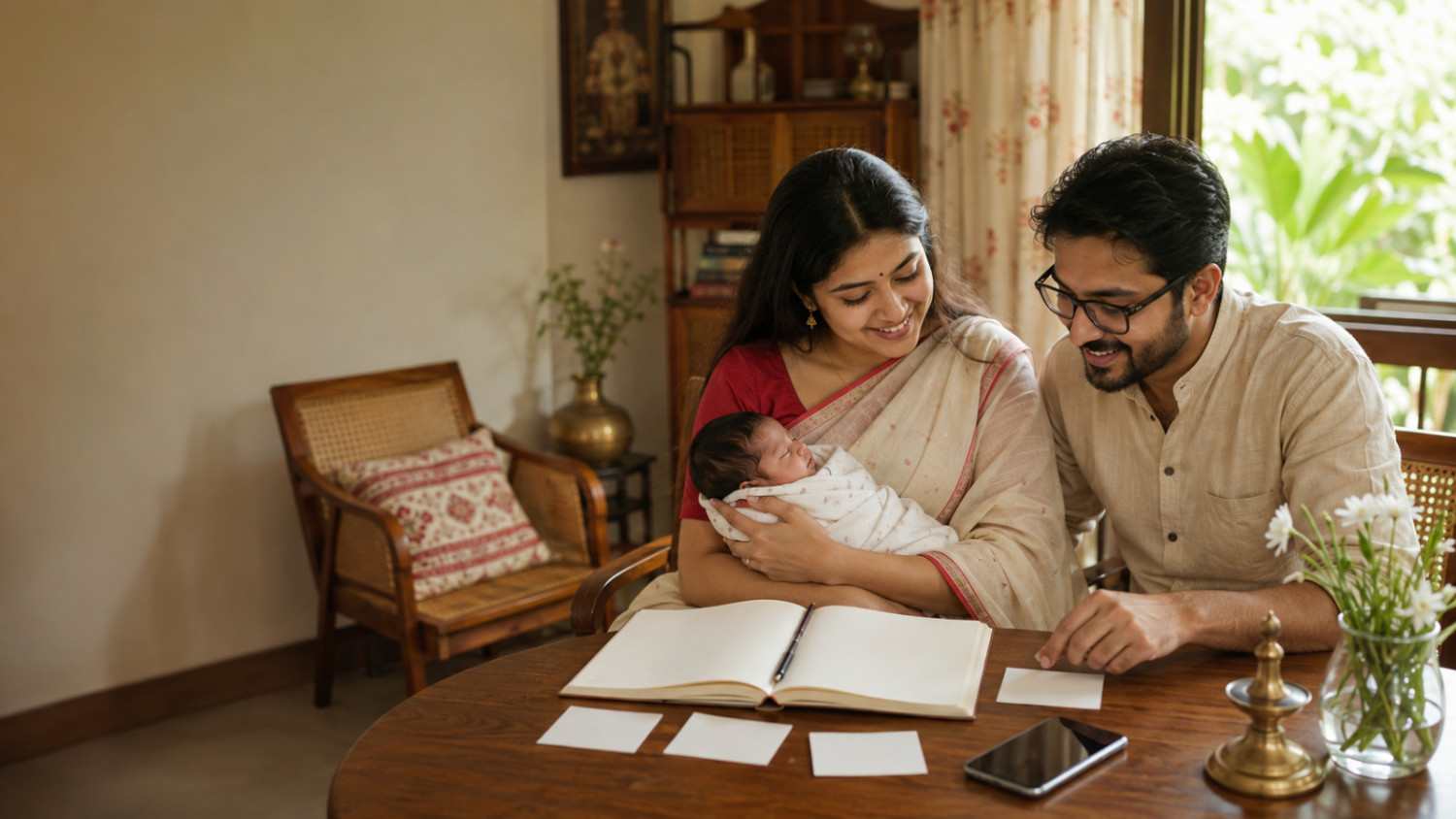

Choosing a name can be deeply personal, and beautiful muslim girl names may appeal for very different reasons: meaning, sound, graceful form, cultural resonance, or simply how naturally a name feels within a family. This collection brings together 56 curated names from established Muslim naming environments while keeping beauty explicitly subjective. Rather than ranking names, it prioritizes established usage, defensible meanings, careful origin labels, and practical spelling awareness.
📖 Quick Summary
- Total names: 56 beautiful Muslim girl names in the complete guide.
- Part 1A: Covers names #1–#28.
- Part 1B: Continues with names #29–#56 to complete the full 56-name collection.
- Meanings & origins: Presented cautiously, with qualifications retained where the evidence is uncertain or disputed.
- Spelling variants: Common transliteration variants are normalized rather than counted as separate names.
- Linguistic accuracy: Muslim usage is kept separate from linguistic origin, so a name used by Muslim families is not automatically described as Arabic.
- Beauty is subjective: The collection highlights appealing and established choices while recognizing that personal, family, and cultural preferences differ.
📚 Table of Contents
What “Beautiful” Means in This Collection
In this collection, beautiful muslim girl names are not ranked by any objective standard. A name may feel appealing because of its meaning, sound, graceful form, cultural resonance, nature or light imagery, or ease of pronunciation. Preferences naturally differ across languages, families, regions, and communities, so the goal is to offer a carefully verified selection rather than declare one style superior to another.
Transliteration, Meanings & Origins
One underlying name can appear in several Roman spellings, especially when Arabic or Persian script is transliterated into English. Those spellings are not automatically separate names, so variants are grouped with the intended source form whenever that relationship is clear.
Source script helps identify which linguistic form a card represents, but script alone does not determine etymology. A name used by Muslim families is not necessarily Arabic in origin, and Arabic origin does not automatically make a personal name Quranic. Persian and Turkish names in this collection therefore retain their own linguistic histories instead of being folded into a general Arabic label.
56 Curated Muslim Girl Names and Their Meanings
Graceful, Familiar & Timeless Names
For families drawn to familiar forms with lasting appeal, these beautiful muslim girl names combine established usage with clear, defensible meanings and recognizable naming traditions.Names With Beautiful or Positive Meanings
This group focuses on names whose established meanings express qualities, emotions, value, affection, or other positive ideas across Arabic, Persian, Turkish, and related Muslim naming traditions.Soft, Short & Easy-to-Pronounce Names
For families who value concise forms and everyday ease, this part of the beautiful muslim girl names collection brings together short or gently pronounced choices from Arabic, Turkish, Persian, and related naming traditions while preserving their verified linguistic backgrounds.
Origin: Arabic.
Variant: Heba.
Note: The meaning is the ordinary lexical sense “gift”; no additional devotional meaning is implied.
Origin: Arabic.
Variants: Hoda, Houda.
Origin: Arabic.
Variant: Samaa.
Note: This card refers specifically to the Arabic form سماء.
Origin: Arabic.
Variant: Rim, where ريم is intended.
Origin: Arabic; established Urdu, Bengali and Indonesian usage.
Origin: Turkish.
Origin: Turkish.
Note: Esin is well established in feminine usage, although genuine male Turkish usage is also attested, so it is not universally female-only.
Origin: Turkish.
Origin: Turkish female personal-name usage; ultimate lexical origin Persian آهو.
Note: Current Turkish naming usage and Persian lexical ancestry are distinct parts of the name’s history.
Origin: Turkish and Azerbaijani female personal-name usage; ultimate lexical origin Persian بانو.
Note: Turkish and Azerbaijani naming usage should be distinguished from the word’s Persian lexical ancestry.
Nature, Light & Celestial-Inspired Names
Nature, light, weather, flowers, birds, and celestial imagery have long contributed expressive vocabulary to personal naming. The names in this group retain those established meanings without turning their imagery into unsupported religious claims.
Origin: Arabic.
Variants: Nur, Nour.
Note: Noor is established for both women and men. The card retains the ordinary lexical meaning “light” without adding a devotional gloss.
Origin: Arabic; established Urdu use.
Note: Qamar is established for both women and men in relevant naming traditions.
Origin: Arabic.
Origin: Arabic.
Variant: Reham.
Note: This inventory is anchored to رهام. Other modern Arabic spellings are also encountered, so the Roman spelling alone does not always identify one unique source spelling.
Origin: Arabic.
Origin: Persian.
Origin: Persian usage; older Sanskrit etymological ancestry.
Variant: Niloofar.
Note: Persian personal-name usage and the name’s deeper etymological ancestry are kept distinct.
Origin: Persian; established Turkish and Azerbaijani naming use.
Origin: Persian.
Origin: Persian.
Variant: Parastu.
Distinctive Yet Established Beautiful Names
This final group offers less routine but established choices whose appeal may come from Persian imagery, familiar cultural usage, or meanings connected with beauty, affection, gemstones, the moon, or nature. Distinctiveness here does not mean novelty or rarity for its own sake.
Origin: Persian.
Origin: Persian.
Origin: Persian.
Variants: Firoozeh, Firuzeh.
Note: The gemstone interpretation is directly defensible. An alternative onomastic interpretation treats the name as possibly a feminine form of Firouz, so neither derivational explanation should be presented as uniquely certain.
Origin: Persian.
Origin: Persian personal-name usage/source form; related Turkish/Azerbaijani form Nazlı.
Note: The Persian form نازلی should not be presented as having an exclusively Persian linguistic history; Turkish and Azerbaijani Nazlı is a related language form.
Origin: Persian.
Origin: Persian.
Note: This Persian feminine name is unrelated to the masculine Biblical name also spelled Ziba in English.
Origin: Persian.
How to Choose a Beautiful Muslim Girl Name

When comparing beautiful muslim girl names, begin with more than appearance or popularity. Check what a name actually means, which language it comes from, how it is pronounced, and whether its usual spelling feels practical for the family and community in which the child will grow up.
It can also help to say each shortlisted name aloud with the family surname, compare likely Roman spelling variants, and consider whether relatives can pronounce it comfortably. Cultural or family associations may matter just as much as dictionary meaning. A website describing a name as attractive should never be the sole reason for choosing it.
- Meaning: Prefer a meaning you understand and genuinely value.
- Source language: Distinguish Arabic, Persian, Turkish and other linguistic histories rather than assuming every Muslim-use name is Arabic.
- Pronunciation: Consider how naturally the name can be said in the languages used at home and in everyday life.
- Spelling: Decide which Roman form your family is most comfortable using consistently.
- Family and cultural fit: Consider traditions, associations and preferences that are meaningful to your household.
- Everyday usability: Think about how the name may work at school, work and in official documents as well as within the family.
Pronunciation, Spelling & Everyday Usability

Many beautiful muslim girl names can appear in more than one Roman spelling because Arabic, Persian and other scripts do not map perfectly onto English letters. Forms such as Aisha/Ayesha, Noor/Nur/Nour or Niloufar/Niloofar may reflect transliteration preferences rather than separate underlying names.
Pronunciation can also shift slightly across Arabic, Persian, Turkish, Urdu, Bengali, other South Asian languages and English-speaking environments. A family may therefore prefer one established spelling over another without changing the underlying name. When two Roman forms could represent different source-language names, checking the original script is especially useful.
For practical use, parents may want a spelling that is both culturally meaningful and manageable on school records, passports, forms and digital systems. Consistency often matters more than trying to identify one universally “correct” Romanization.
How to Verify a Name’s Meaning and Origin
Baby-name websites can be useful for discovering possibilities, but an attractive list should not be the sole authority for etymology. A stronger approach is to check lexical meanings against dictionaries or linguistic references appropriate to the source language and then separately confirm that the form has established personal-name usage.
It is also important to distinguish several questions that are often blurred together: where a word ultimately came from, which language currently uses the personal name, which script is being displayed, and which communities use the name today. A Persian-origin word used by Turkish families, for example, should not automatically be relabeled as originally Turkish.
Religious claims need similar care. An Arabic word occurring in Quranic language is not automatically a female personal name appearing in the Quran, and a positive meaning does not by itself establish a special Islamic recommendation. Devotional additions such as “gift of Allah” should not be attached to ordinary lexical meanings unless there is specific evidence for that formulation.
Where etymology or normalization is genuinely uncertain, retaining the qualification is more accurate than replacing uncertainty with an appealing but unsupported claim.
Frequently Asked Questions
There is no universal test. When families compare beautiful muslim girl names, they may respond to meaning, sound, graceful form, cultural resonance, imagery, family associations or ease of pronunciation. Another family may reasonably prefer a completely different style, so beauty should remain a personal judgment rather than a ranking presented as fact.
Short forms such as Hiba, Huda, Sama, Reem, Salma, Duru and Ece may feel manageable to many speakers, but ease of pronunciation depends on a person’s language background. It is useful to say a shortlisted name aloud in the languages commonly used by the family before deciding.
No. Muslim naming traditions extend across many languages and cultures. This collection includes established Persian and Turkish choices alongside Arabic names, while Sara illustrates how a Hebrew/Semitic-origin name can also have long-established Muslim and Arabic-speaking usage.
No. Arabic linguistic origin and Quranic status are different questions. A name may be Arabic without being a personal name mentioned in the Quran, and an Arabic word that occurs in Quranic text should not automatically be marketed as a Quranic girl name.
First confirm that the spellings really represent the same underlying name. Then consider family preference, pronunciation, established regional usage and consistency across official documents. The original Arabic or Persian script can sometimes help resolve an ambiguous Roman spelling.
Yes, many Persian and Turkish names have established use in Muslim cultural environments. Their use by Muslims does not erase their linguistic histories, so Persian names should remain identified as Persian and Turkish names as Turkish where that is the defensible origin or naming-language classification.
Conclusion
The right choice among beautiful muslim girl names depends on the family making it, not on an objective ranking. Meaning, sound, cultural fit, pronunciation, spelling and everyday usability can all deserve consideration, while careful verification helps prevent attractive but inaccurate meanings or origin claims from influencing an important decision.
A thoughtful shortlist can therefore balance personal preference with linguistic accuracy: choose a name that feels meaningful to your family while remaining clear about what the name is known to mean and where its linguistic history comes from.
Why Trust HuntBliss for Muslim Name Research?
HuntBliss approaches name research by separating discovery from verification. Meanings are checked cautiously, source-language distinctions are preserved, transliteration variants are normalized where they represent the same underlying name, and obvious variant duplication is avoided.
Religious and Quranic claims are treated conservatively rather than being inferred from Arabic spelling or positive meaning alone. Where a derivation or normalization remains uncertain, the uncertainty is retained instead of being replaced with a more attractive claim. Commercial baby-name lists may help identify possibilities, but they are not automatically treated as lexical authorities.
HuntBliss provides informational editorial research and does not present itself as an Islamic religious authority.
Editorial & Copyright Note
The selection, organization, categorization, explanations and editorial presentation on this page are original HuntBliss work. Personal names themselves belong to the languages, cultures and naming traditions in which they are used and are not proprietary to HuntBliss.
Meanings, origins, transliterations and usage notes are provided for informational purposes. Spellings and pronunciation can vary across regions, languages and families. Questions requiring specialist linguistic, legal or religious judgment may be checked with an appropriately qualified authority.
External Sources & Further Reading
- Arabic Language Academy in Cairo — Arabic lexical reference resources.
- Lane’s Arabic-English Lexicon — historical Arabic lexical reference.
- Dehkhoda Dictionary — Persian lexical reference, including material consulted for Persian semantic checks.
- Steingass, A Comprehensive Persian-English Dictionary — Persian lexical and etymological reference.
- Türk Dil Kurumu (TDK) — Turkish-language reference resources.
- Behind the Name — secondary onomastic reference used cautiously for established personal-name usage, gender and variant checks.