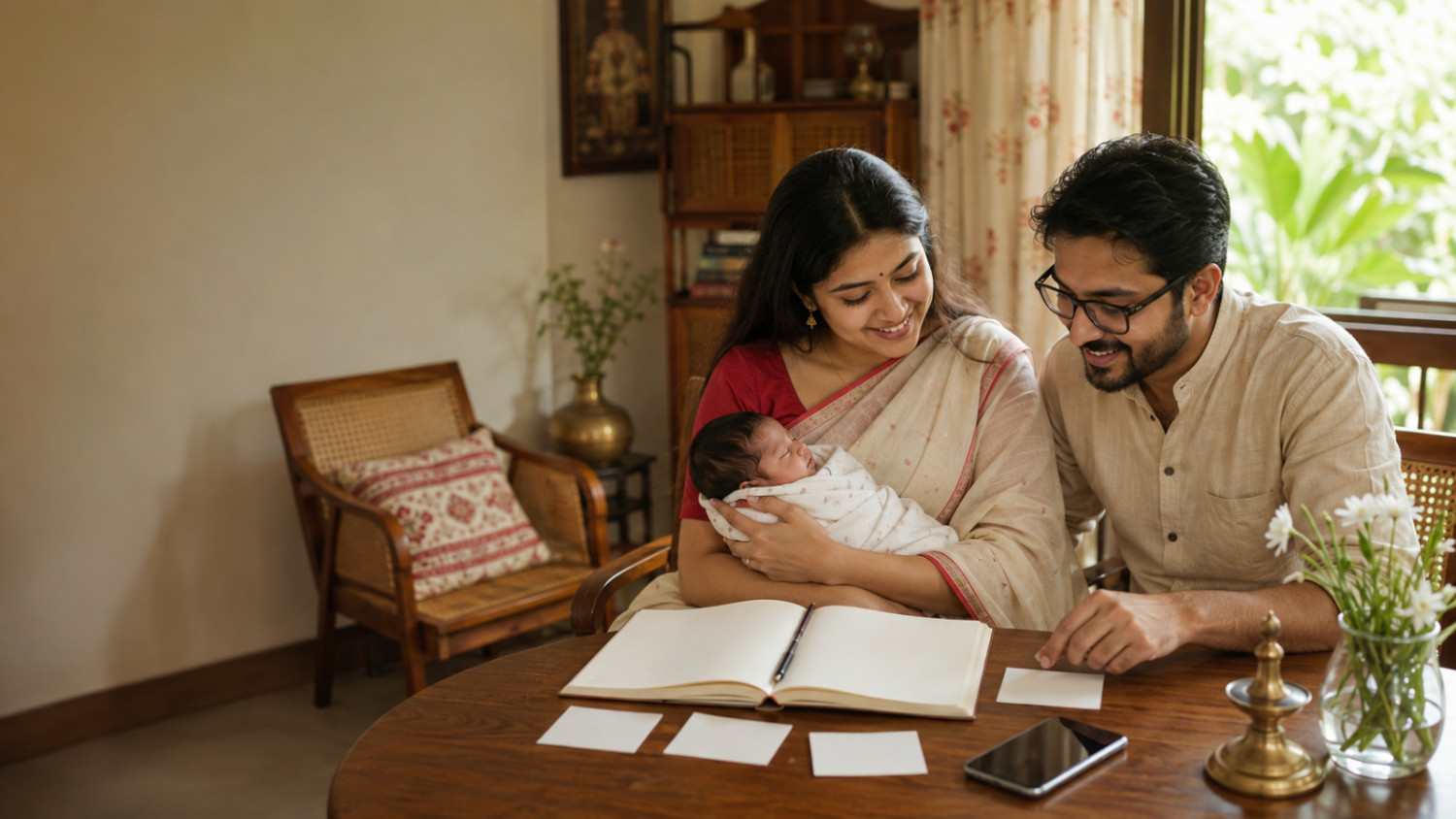

Exploring muslim girl names starting with i opens up a naming tradition that is much broader than Arabic alone. The collection includes Arabic names, Urdu and South Asian transmissions, Swahili and East African usage, Turkish names, and forms used across wider Muslim communities. Some names are direct Quranic words, while others only share Quranic roots. Transliteration can also produce several Roman spellings for one underlying name, and a few choices are cross-gender or region-dependent rather than universally feminine.
For a wider collection covering many letters and naming traditions, see Muslim Girl Names.
📖 Quick Summary
- The complete article includes 29 verified names rather than padding the list with duplicate spellings.
- This collection of muslim girl names starting with i covers Arabic, South Asian, African, Turkish, and wider Muslim naming traditions.
- Each name is checked for meaning, linguistic origin, transmission, gender usage, and useful spelling variants.
- Transliteration variants are normalized so one underlying name is not counted several times.
- Direct Quranic vocabulary is kept separate from names that only share Quranic roots.
- None of the 29 retained names is the proper name of a female person explicitly named in Quranic text.
- Cross-gender and region-dependent names are clearly identified where relevant.
- The full article also includes practical naming guidance, pronunciation and spelling advice, FAQs, and related Muslim girl-name articles.
📚 Table of Contents
Spelling, Transliteration & I-Name Normalization

When researching muslim girl names starting with i, several Roman spellings can represent the same underlying personal name. This article therefore follows a simple rule: one underlying name equals one card. Iman, Imaan, Imane, and Imen belong to the same Arabic name family; Inaya, Inayah, and Inaaya are normalized together; and Iqra, Iqraa, and regional Ikra or İkra represent the same source identity. Similar normalization applies to Isra/Israa, Ibtisam/Ibtesam/Ibtissam, Ibtihal/Ebtihal/Ibtihaal, Ikhlas/Ikhlaas, Intisar/Intissar/Entissar, and Izzah/Izza.
Shared etymology, however, does not always mean identical personal-name identity. Imani is related historically to Arabic Iman but has become an independently established Swahili lexical and personal-name form, so it receives its own card later in the article. Likewise, Urdu Inayat is related to Inaya but has broader cross-gender usage and should not be treated as merely another uncomplicated girl-name spelling.
29 Muslim Girl Names Starting With I
Arabic & Quranic-Vocabulary I Names
This category includes both direct Quranic vocabulary and names that are only related to roots or derived forms found in Quranic Arabic. Those are not the same classification. None of the 29 retained names in the complete article is the proper name of a female person explicitly named in Quranic text, and several names in this group are cross-gender even though they may be commonly encountered on girl-name lists.Origin: Deeper linguistic origin uncertain; transmitted into modern Urdu and South Asian female naming through its Quranic association.
Gender: Clearly female in modern personal-name use.
Variants: Irum, Eram, Erum. Turkish İrem is a related regional transmission.
Quranic note: Iram occurs directly in Quran 89:7, but the Quranic referent is not a woman. The name should therefore not be described as a female person named in the Quran.
Meaning safeguard: Claims such as “garden in heaven,” “garden of Paradise,” or “beautiful garden in Jannah” should not be presented as the verified lexical meaning of Iram.
Origin: Arabic lexical origin from عِفَّة, strongly transmitted through Persian, Urdu, and South Asian naming.
Gender: Clearly female.
Related forms: Iffah; Turkish İffet is a related regional transmission rather than merely another English spelling of Iffat.
Quranic note: The name is connected through a Quranic root/derivational relationship rather than being a female proper name in the Quran.
Meaning note: The concise lexical meanings are preferable to embellished phrases such as “purity of soul” or “virtuous lady.”
Origin: Arabic lexical source with established Somali Muslim transmission and female personal-name use.
Gender: Region-qualified female.
Quranic note: Ifrah is related to a Quranic root/derivational family rather than being a Quranic female proper name.
Meaning safeguard: For the source form إفراح, “gladdening” or “making happy” is more precise than reducing the meaning to the direct nouns “joy” or “happiness.” Not every modern bearer necessarily reaches the name through exactly the same regional linguistic path.
Origin: Arabic lexical origin transmitted through Urdu, Bengali, Persianate, and other Muslim naming traditions.
Gender: Cross-gender; substantial male and female use exists in different regions.
Variants and related forms: Ismah and Esmat may occur. Turkish/Balkan Ismet or İsmet is related regionally but should not be treated as an uncomplicated girl-name spelling because masculine use is substantial.
Quranic note: Root/derivational relationship only.
Meaning note: “Infallibility” may occur in specialized theological usage of the Arabic lexical family, but it is too narrow to use as the universal baby-name meaning.
Origin: Arabic lexical ancestry strongly transmitted through Persian, Urdu, Bengali, and wider South Asian naming.
Gender: Cross-gender; both male and female personal-name use is established in South Asia.
Variant: Eshrat.
Usage note: The lexical sense should not be reduced simply to “happiness,” and a distant root relationship does not justify promoting Ishrat as a Quranic name.
Origin: Arabic, with established Bengali and South Asian Muslim naming use.
Gender: Cross-gender; it should not be presented as female-only.
Variants: Eshraq; Ishraque only where the same source identity is intended.
Quranic note: Root/derivational relationship rather than a Quranic female proper name.
Meaning note: “Sunrise” may be appropriate in particular lexical contexts, but “radiance” or “illumination” is the safer concise meaning for this name.
Rare Arabic, African, Turkish & Distinctive Muslim-Use I Names
The wider range of muslim girl names starting with i also includes less-common Arabic forms, an independently established Swahili identity, and Turkish names whose relevance comes through regional Muslim culture rather than Arabic linguistic origin. These distinctions matter because shared religious or cultural use does not make every name etymologically Arabic.
Origin: Arabic.
Gender: Clearly female.
Quranic note: Root/derivational relationship only; it is not a female proper name appearing in Quranic text.
Meaning note: The lexical meaning should remain concise rather than being expanded into personality claims such as “successful woman” or “radiant girl.”
Origin: Arabic.
Gender: Clearly female.
Variant: I’tidal.
Quranic note: Its connection is through a Quranic root/derivational family. It is not the proper name of a woman in Quranic narrative.
Origin: Arabic.
Gender: Clearly female in established, though relatively uncommon, Arabic personal-name use.
Variant: I’timad.
Islamic-status note: Itimad is retained as a general Muslim cultural-use name rather than a Quranic name. A remote consonantal-root relationship is not sufficient reason to market it as “from the Quran.”
Origin: Arabic.
Gender: Region-qualified female.
Variants: Elaf, Eilaf.
Quranic note: The exact form īlāf occurs in Quran 106:1 and 106:2 as vocabulary. It is not the personal name of a woman in Quranic text.
Meaning safeguard: Attractive modern phrases such as “divine bond,” “bond from Allah,” or “heavenly connection” should not replace the verified lexical sense.
Origin: Swahili, historically borrowed from Arabic إيمان.
Transmission and use: Imani is an independently established East African and Swahili lexical and personal-name identity with historical Arabic-Islamic influence. It is also used outside Muslim communities.
Gender: Cross-gender.
Normalization note: Imani is related historically to Arabic Iman, but it is not merely another spelling of Iman.
Usage safeguard: Do not describe Imani as exclusively Arabic, exclusively Muslim, female-only, or a Quranic personal name.
Origin: Turkish/Azerbaijani.
Gender: Clearly female.
Variant: Inci when Turkish diacritics are unavailable.
Spelling note: The native Turkish spelling begins with dotted capital İ. No Arabic-script form is needed because İnci is a Turkish name.
Origin: Turkish.
Gender: Clearly female.
Variant: Ipek in international writing where Turkish diacritics are unavailable.
Spelling note: Native Turkish İpek should be preserved where practical. The name does not require an invented Arabic-script equivalent.
Origin: Turkish compound: ilk means “first,” while nur means “light.”
Gender: Clearly female.
Variant: Ilknur in international writing.
Origin note: İlknur is a Turkish personal-name formation. The Arabic historical origin of the component nur does not make the complete name an Arabic personal name.
Origin: Turkish.
Gender: Clearly female.
Native lexical form: ırmak.
Spelling note: Turkish distinguishes dotted i from dotless ı. The English-facing personal-name spelling Irmak is widely recognizable, while the native Turkish lexical form begins with dotless ı. The name is Turkish and should not be assigned Arabic or Persian origin or an artificial Arabic-script spelling.
How to Choose an I-Starting Muslim Girl Name

A useful shortlist begins with the verified identity of each name. Check its lexical meaning, source language, original script where applicable, pronunciation, gender pattern, regional use, and whether several Roman spellings represent one underlying form.
Quranic association also needs precision. A word appearing directly in scripture is not automatically the personal name of a woman in the Quran, while a root-derived personal name should not be promoted as though its exact form appears in the text. Iram is a particularly useful example: it occurs directly in the Quran, but not as a woman’s name, and its deeper lexical etymology remains uncertain.
Regional gender can matter just as much as origin. Ismat, Ishrat, Ishraq, and Imani are cross-gender, while Ifrah and Ilaf have more region-qualified female use. Parents who want a name that is consistently perceived as feminine across countries should consider this before registration.
It is also practical to choose one Roman spelling for birth certificates, passports, school records, and other documents. Once a family has identified the intended Arabic, Urdu, Swahili, or Turkish source form, consistency can prevent avoidable spelling problems later.
Pronunciation, Spelling & Everyday Use
Spelling variation is especially important when comparing muslim girl names starting with i. Iman may appear as Imaan, Imane, or Imen in different regional traditions; Inaya as Inayah or Inaaya; Isra as Israa; Iram as Irum, Eram, or Erum; Ibtisam as Ibtissam; Ibtihal as Ebtihal; Intisar as Intissar or Entissar; and Izzah as Izza.
Other families require more than simple spelling consolidation. Iffat and Iffah are closely related, while Turkish İffet represents a regional transmission and should not automatically be listed as merely another English spelling. In the same way, Turkish İkra may reflect regional adaptation of Arabic Iqra, but the Turkish spelling convention deserves recognition rather than being erased.
Ilaf may appear as Elaf or Eilaf. These forms can represent the same Arabic identity, but the family’s intended spelling should be kept consistent in official documents.
Imani requires a different treatment. It is historically related to Arabic Iman, but modern Imani is independently established as a Swahili lexical and personal-name form. The two should therefore remain separate cards rather than being merged as ordinary spelling variants.
Inaya and Inayat are likewise related without being identical in every naming context. Inayat has distinct regional and cross-gender behaviour and should not automatically be treated as just another spelling of Inaya.
Turkish spelling introduces another practical distinction. İnci, İpek, and İlknur use dotted capital İ, whereas the Turkish lexical form ırmak begins with dotless ı. International keyboards and administrative systems may simplify these characters, so families may encounter Inci, Ipek, Ilknur, or Irmak in English-language records.
Arabic, Urdu, African & Turkish I-Name Differences
Muslim naming traditions are multilingual. A name can be widely used by Muslim families without being Arabic in linguistic origin, and a name common in Urdu-speaking communities may still derive lexically from Arabic.
Arabic examples in the full collection include Iman, Inaya, Iqra, Isra, Ibtisam, Ilham, Inas, Ibtihaj, Ibtihal, Ikhlas, Ikram, Inam, Intisar, Izzah, Izdihar, Itidal, Itimad, and Ilaf.
Iffat, Ismat, and Ishrat illustrate Arabic lexical forms that became deeply established through Persianate, Urdu, Bengali, and South Asian Muslim naming. Their regional cultural familiarity should not be confused with Urdu lexical origin.
Ifrah is another useful case. Its frozen source form is Arabic إفراح, but established Somali Muslim usage is an important part of its modern onomastic identity. Ignoring that regional transmission would give an incomplete account of the name.
Imani is different again. It is an independently established Swahili word and personal name, historically borrowed from Arabic īmān. It therefore belongs to East African/Swahili naming rather than being treated merely as a Roman variant of Arabic Iman.
İnci, İpek, İlknur, and Irmak belong to Turkish naming traditions. İlknur demonstrates how a Turkish name can contain a component of Arabic historical origin without making the complete personal-name formation Arabic.
Quranic Vocabulary & Islamic-Heritage Cautions
A Quranic relationship can take several forms. HuntBliss distinguishes a female proper name explicitly present in Quranic text, a direct Quranic lexical or textual form, a root or derivational relationship, a specific historical or Islamic-heritage association, and general Muslim cultural use.
Across this final 29-name collection, none is the name of a female person explicitly named as such in Quranic text. Six names are direct Quranic textual or lexical forms: Iman, Iqra, Ikram, Izzah, Iram, and Ilaf.
Fifteen names have root or derivational relationships rather than the status of an exact Quranic female proper name: Isra, Ibtisam, Ilham, Inas, Ibtihaj, Ibtihal, Ikhlas, Inam, Intisar, Iffat, Ifrah, Ismat, Ishraq, Izdihar, and Itidal.
There are no names in the final inventory whose primary classification depends on a separate historical/Islamic-heritage bearer. Eight are best treated as general Muslim cultural-use names: Inaya, Ishrat, Itimad, Imani, İnci, İpek, İlknur, and Irmak.
This distinction prevents common SEO-style errors. A Quranic imperative such as Iqra is vocabulary, not a girl character; Iram is a Quranic proper referent, but not a woman; a root-related name is not automatically an exact Quranic name; and a Surah title or sacred association does not establish a female personal name.
Readers specifically researching scripture-related choices can also see [INTERNAL LINK: Islamic Baby Girl Names From Quran].
Frequently Asked Questions
Examples of muslim girl names starting with i include Iman, Inaya, Iqra, Ibtisam, Ilham, Iffat, Iram, Izdihar, Ilaf, İnci, İpek, and Irmak. Their linguistic backgrounds differ, so meaning, gender, source language, and regional use should be checked individually.
In this collection, Iman, Iqra, Ikram, Izzah, Iram, and Ilaf are classified as direct Quranic lexical or textual forms. That does not mean they are female people named in Quranic narrative.
No. The frozen lexical meaning for Inaya is “care” or “concern.” Phrases such as “gift of Allah,” “Allah’s gift,” or “blessing from God” are popular embellishments rather than the verified lexical meaning.
Quran 96:1 contains iqraʾ as an imperative meaning “read” or “recite.” The word later became established as a personal name, but the verse is not naming a female character called Iqra.
No verified lexical evidence in this article supports that definition. Quran 89:7 contains Iram as a non-female proper referent. Its deeper etymology remains uncertain, so “garden in heaven” or “garden of Paradise” should not be presented as the established meaning.
No. Iman is the Arabic name based on إيمان, meaning faith or belief. Imani is an independently established Swahili lexical and personal-name identity that was historically borrowed from Arabic. They are historically related but are not merely alternate spellings of one modern name.
No. Ilham has cross-gender usage. It is used by women in some Muslim naming traditions and by men in others, so presenting it as universally female would hide an important regional distinction.
Related Muslim Girl Name Articles
- Muslim Baby Girl Names
- Islamic Baby Girl Names from Quran
- Modern Muslim Girl Names
- Muslim Girl Names Starting With S
- Unique Muslim Girl Names
- Beautiful Muslim Girl Names
- Muslim Girl Names Starting With A
- Top 100 Muslim Girls Names
- Muslim Girl Names Starting With F
- Muslim Girl Names Starting With N
- Indian Muslim Girl Names
- Muslim Girl Names Starting With D
- Muslim Girl Names Starting With T
- Muslim Twin Baby Girl Names
Conclusion
The strongest muslim girl names starting with i are not necessarily the ones with the most attractive online descriptions. A reliable shortlist comes from checking the source language, lexical meaning, regional gender pattern, pronunciation, spelling variants, Quranic status, and how the chosen form will work in everyday family and official use.
This collection also shows the linguistic breadth of Muslim naming: Arabic vocabulary sits alongside South Asian transmission, Somali usage, an independent Swahili identity, and established Turkish names. Keeping those histories separate makes the final choice more accurate and culturally transparent.
Why Trust HuntBliss for Muslim Name Research?
HuntBliss checks source scripts, lexical meanings, linguistic origin, transmission history, Quranic status, gender, and variant families instead of treating every commercial baby-name description as reliable. One underlying identity is normally counted once, while genuinely independent identities remain separate.
This approach is why unsupported descriptions such as “gift of Allah” for Inaya and “garden in heaven” for Iram are rejected. It also explains why Iman and Imani remain separate, why cross-gender names are disclosed honestly, and why Turkish names retain Turkish spelling conventions rather than receiving fabricated Arabic-script forms.
When a meaning or deeper etymology is uncertain, that uncertainty is stated rather than replaced with a more attractive invented definition.
Editorial & Copyright Note
The organization, explanations, normalization decisions, and editorial presentation of this article are original HuntBliss work. Linguistic meanings, source scripts, Quranic relationships, and established regional usage are reference-based factual information.
Roman transliterations can vary between languages, countries, and families. Muslim use does not automatically establish Arabic origin, and a word appearing in Quranic text is not automatically the proper name of a woman. Historical, literary, or sacred associations must also remain separate from lexical etymology.
This article is provided for informational and naming-research purposes and is not a religious ruling.
External Sources & Further Reading
- Arabic and Quranic research: Quranic Arabic Corpus, Lane’s Arabic-English Lexicon, Hans Wehr, and established Arabic dictionaries.
- Persian and Urdu research: Dehkhoda where relevant, Steingass’ Persian-English dictionary, Platts’ Urdu dictionary, Digital Dictionaries of South Asia, and Rekhta Dictionary.
- Turkish research: Türk Dil Kurumu resources and reliable Turkish personal-name and usage references.